I remember my mom making a dry fish preparation called Bhaja Curry with begun (baingan/aubergine). I think that it has its origin in East Bengal since I have not really heard of it elsewhere.
This dish needs a certain type of begun (baingan/aubergine) that I have not really seen since I moved away from Kolkata. Now, this type of begun is elongated and unlike the baingan that I normally find in the market (either small or large but with a distinct shape that defines our memort of baingan)

When I saw these with Sita (my vegetable vendor of choice), I bought them on a lark and then wondered what to do with them.
Making bhaja curry is quite impossible without the fish (and that too when you wake up on a work day morning). So I tried to replicate as much I could dredge from my memories of sitting in my grnadmom's kitchen in Bandel. Most of the memories were rather obscured by rather more vivid memories of one or the other dog in that kitchen—Honey, Gypsy, Sandy, or perhaps even Candy... Anyways...
I sliced the begun as quickly as I could...
 Once all the begun was sliced, I put them in the vessel I use as an impromptu colander...
I sprinkled haldi (turmeric) and worked it into the begun without crushing or mangling them.
 Then I put some dhania powder and worked that in as well, and then kept the lot aside as I prepared for the rest of the process...

Just before I started cooking I added a little salt to the begun as well, since adding it before would result it the begun releasing all the water in them and becoming a mangled useless pulp.
Now this is where I went completely away from the 'Bengali'ness of the original recipe.

I took methi, til (sesame), curry patta (curry leaves), and chopped some garlic as well...
All this went into the pan with whatever cooking I had at hand...

I added the begun and cooked the mixture by tossing the entire thing to coat the oil instead of using a ladle. If I used a ladle the thin and delicate begun slices would immediately mangle into a rather pulpy mass...
 Idea is to cook the begun well while retaining the coat of spices without destroying the slices that provide the texture.
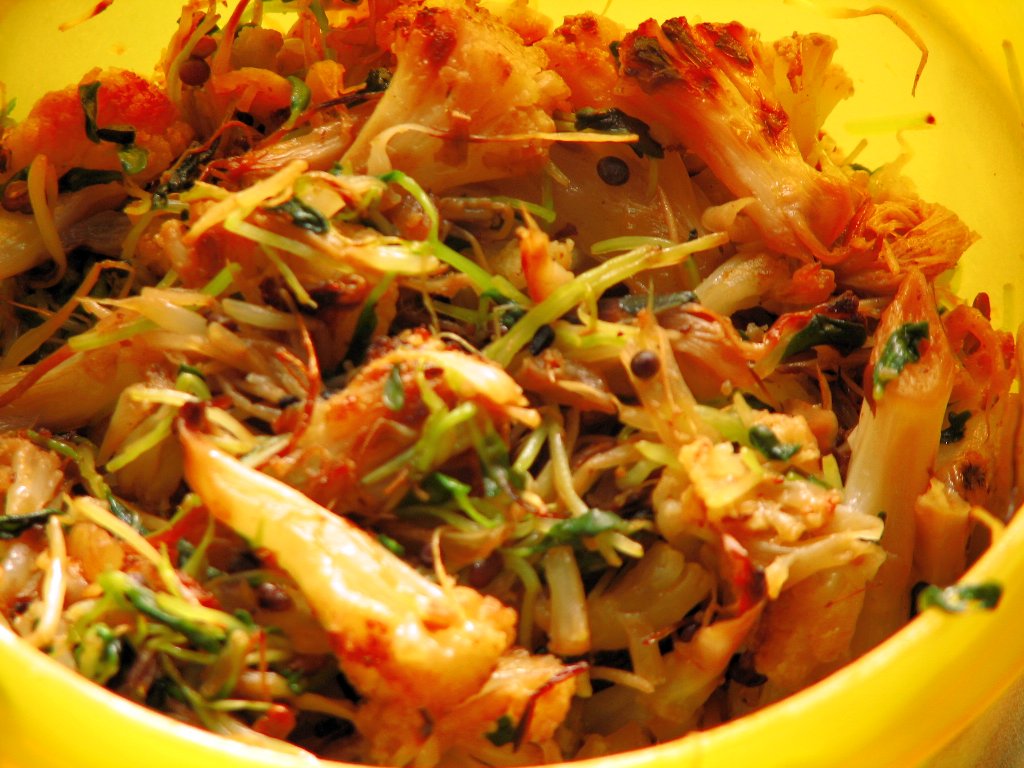
I knew that I was done when it looked like this....

Then it was into a recycled take-away dabba and I rushed to

This dish needs a certain type of begun (baingan/aubergine) that I have not really seen since I moved away from Kolkata. Now, this type of begun is elongated and unlike the baingan that I normally find in the market (either small or large but with a distinct shape that defines our memort of baingan)

When I saw these with Sita (my vegetable vendor of choice), I bought them on a lark and then wondered what to do with them.
Making bhaja curry is quite impossible without the fish (and that too when you wake up on a work day morning). So I tried to replicate as much I could dredge from my memories of sitting in my grnadmom's kitchen in Bandel. Most of the memories were rather obscured by rather more vivid memories of one or the other dog in that kitchen—Honey, Gypsy, Sandy, or perhaps even Candy... Anyways...
I sliced the begun as quickly as I could...

I sprinkled haldi (turmeric) and worked it into the begun without crushing or mangling them.


Just before I started cooking I added a little salt to the begun as well, since adding it before would result it the begun releasing all the water in them and becoming a mangled useless pulp.
Now this is where I went completely away from the 'Bengali'ness of the original recipe.

I took methi, til (sesame), curry patta (curry leaves), and chopped some garlic as well...
All this went into the pan with whatever cooking I had at hand...

I added the begun and cooked the mixture by tossing the entire thing to coat the oil instead of using a ladle. If I used a ladle the thin and delicate begun slices would immediately mangle into a rather pulpy mass...

I knew that I was done when it looked like this....

Then it was into a recycled take-away dabba and I rushed to